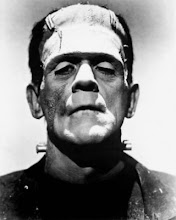
While it is easy to view Frankenstein as a "horror" novel, the underlying message is actually social commentary on the effects of human prejudice and discrimination. The monster is an outcast of society because of his appearance. "Normal" human beings abhor his ugliness and, therefore, shun him. Even though the monster initially shows an ability to be friendly and loving, no one can see past his looks, so he never has a chance to fit in. After living in misery and loneliness for so long, the monster becomes angry at his position as a social outcast. He begins to feel justified in seeking revenge on those who have shunned him, especially his creator, Dr. Frankenstein. While there is no real justification for the monster's murderous rampage, we can understand his motive: he has endured the pain of prejudice long enough and must act out on his feelings of bitterness and anger.
Zehra Ali
Showing posts with label zehra. Show all posts
Showing posts with label zehra. Show all posts
Saturday, April 3, 2010

Saturday, March 27, 2010
In frankenstein his narrative victor portrays women as weak, suffering, obedient beings who live for men and depend on them in their lives. Surely shelly experienced this in her life, though she may or may not have agreed with it. Ironically the monster the one who victor call barbarian has a very progressive notion of the opposite sex. He believes that men and women are largely equal, not being bought up in frankenstein pre-feminist culture. The monster desires for a female companion does not convey a desire to rule over a women or a belief that a women should be dependent on him, but it simply shows his need for an equal companion with whom to share his equal sufferings.
Zehra Ali
Sunday, March 21, 2010
Working class costume of 17th century women

Foreign visitors to England would often remark how well dressed the English* women were, one traveller has been quoted to say that English women would wear velvet on her back when she had not a crust of bread in her house. It shows that England did not have the ragged poor of Europe. Britain had not had a peasant class since mediaeval times and this was reflected in the appearance of its people.
*There may have been minor regional differences, for the purposes of re-enactment a broad-based English style is appropriate.
It was easy to tell the status of a person by the clothes they wore. The richer you were; the better fitted, brighter coloured and more decorative were the clothes you and your family wore. This extended to any servants you had. Clothes were part of servants pay, a well favoured servant could also expect to receive presents of cast off clothes from master or mistress, to be worn or sold on. The second hand market for clothing dressed the poorer in society and helped to finance the fashions of the aspiring rich.
Clothes were looked after, they were kept as clean as possible and were maintained in a good state of repair. The proverb 'a stitch in time saves nine' came from the days when if a repair was not rapidly done, further damage would be caused. Clothes were patched and darned until repair was no longer possible, when the item might be taken apart to be made into something else, for example, used to line quilts.
When researching early costume, the clothing of the poor is more difficult to trace. There are no surviving garments and few artists bothered to record what the poor wore - they could not afford to pay for portraits. However there are various ways to find out what was worn by the 'common folk'.
*There may have been minor regional differences, for the purposes of re-enactment a broad-based English style is appropriate.
It was easy to tell the status of a person by the clothes they wore. The richer you were; the better fitted, brighter coloured and more decorative were the clothes you and your family wore. This extended to any servants you had. Clothes were part of servants pay, a well favoured servant could also expect to receive presents of cast off clothes from master or mistress, to be worn or sold on. The second hand market for clothing dressed the poorer in society and helped to finance the fashions of the aspiring rich.
Clothes were looked after, they were kept as clean as possible and were maintained in a good state of repair. The proverb 'a stitch in time saves nine' came from the days when if a repair was not rapidly done, further damage would be caused. Clothes were patched and darned until repair was no longer possible, when the item might be taken apart to be made into something else, for example, used to line quilts.
When researching early costume, the clothing of the poor is more difficult to trace. There are no surviving garments and few artists bothered to record what the poor wore - they could not afford to pay for portraits. However there are various ways to find out what was worn by the 'common folk'.
Zehra Ali
http://www.12eyes.co.uk/stays/ordwomen.htm
Subscribe to:
Posts (Atom)